

Through Her Lens: Women Witness Celebrates a Decade of Photojournalism
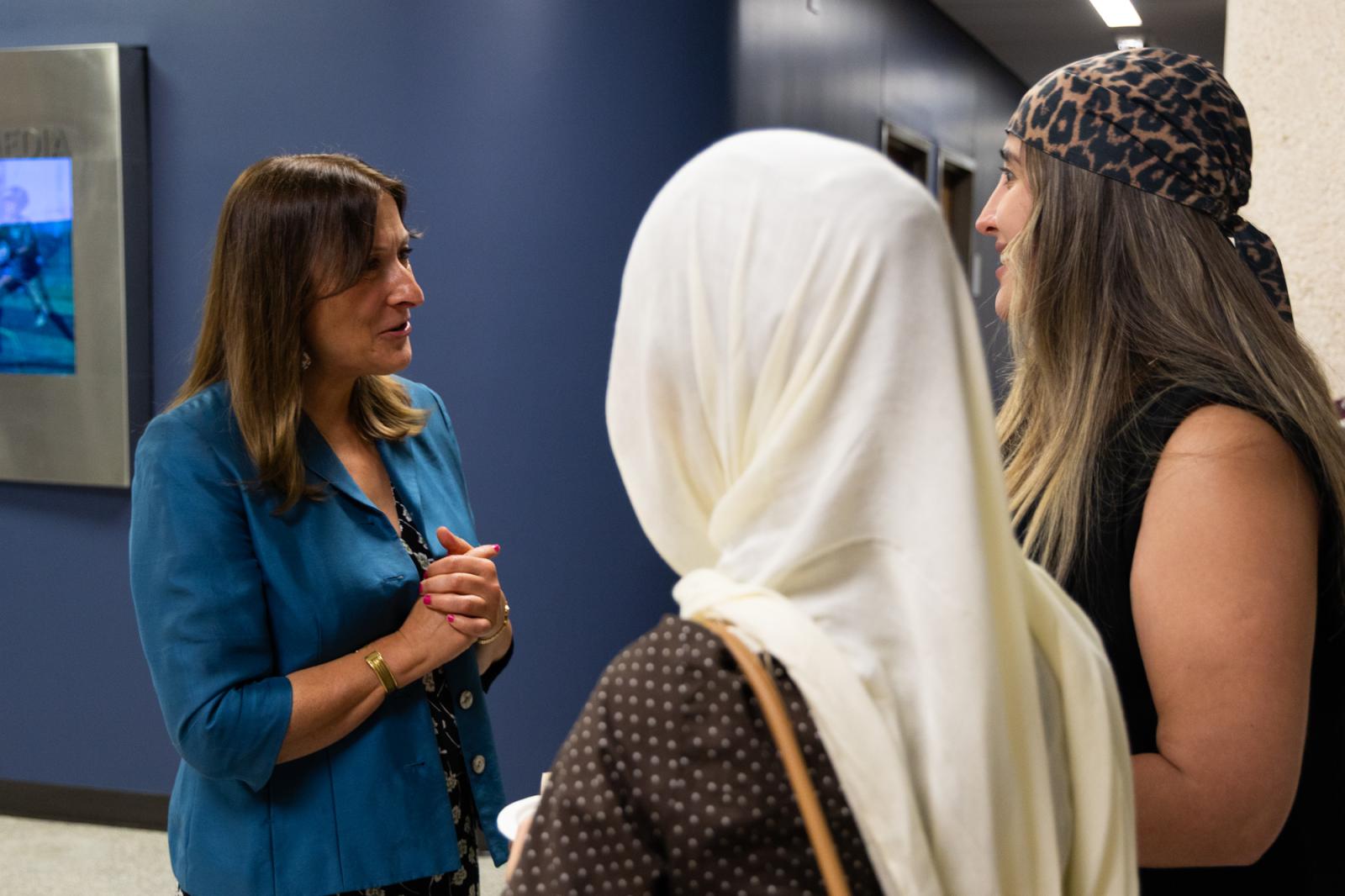
The University of Texas at Austin hosted “Women Witness: 10 years of the Marilyn Stafford FotoReportage Award” at the Dealey Center for New Media on Thursday, Oct. 5, honoring a decade of female photojournalists documenting critical global issues.
Hosted by FotoDocument co-founder Nina Emett and UT photojournalism professor Donna De Cesare, the event showcased photography work of the past award winners and shared the impact the grant has made for women photographers.
The award honors the legacy of Marilyn Stafford, a pioneering 20th-century photographer known for her extensive coverage of cultural news and humanitarian concerns.
Emett first connected with Stafford in 2014 after Stafford offered to support Emett’s work, a gesture that organically blossomed into a mission to support other female photographers.
"It became clear that FotoDocument could become a vehicle," Emett said. "I immediately agreed it would be good to support other women, as long as we put it under her legacy and in her name, because by this time I discovered what an amazing 20th-century photographer she was."
That legacy resonated with freshman journalism student Hailey Lloyd as she discovered Marilyn’s work for the first time.
“I had never heard of Marilyn before this event," Lloyd said. "Seeing her work, I realized she didn't do it for money — she did it to help disregarded communities around the world, especially in impoverished places where we can make a difference."
The event kicked off on the fifth floor of the Dealey Center for New Media before transitioning to the third-floor gallery, where past winners’ photo essays are on display. Students and attendees walked through the gallery, reading the detailed captions and taking in the artwork.
Among the featured projects was this year’s winning essay by Johanna Alarcón, which documents indigenous midwives in remote regions of Ecuador where native women face significantly higher maternal mortality rates. Emett pointed to Alarcón’s work to highlight how women photographers can bring underreported perspectives to light.
“Women have not had enough recognition as photographers worldwide," Emett said. "Having an award that focuses on women is really important — I want to see women take up more space in this world."
Emett noted that this historical lack of recognition spans generations, pointing to how Stafford did not receive appreciation for her photography until late in life. A point that strongly resonated with journalism student Maddie Stone.
"I’ve studied a lot of women photographers who were only discovered after they died," Stone said. "So, I find it really inspiring and hopeful that she brought that to attention, especially being a woman."
For students walking through the gallery, the exhibit offered both inspirational and technical lessons. While some students were focused on the narrative depth of the photography, others were drawn to the technical artistry of the shots.
Daniel Boteo, a junior journalism student, explained that he loved the storytelling showcased with the winners' essays. "I see myself as an enterprise reporter who values slower, long-form stories," Boteo said. "The amount of work and dedication these reporters put in is simply unmatched and inspiring."
Though the event focused on elevating women in photography, Boteo said he felt right at home among fellow storytellers. "Even though this event was geared toward women, just being around a bunch of like-minded journalists who share the same passion for capturing every detail and making a good cohesive story is simply amazing," Boteo said.
For radio-television-film student Joseph Chunga Pizarro, the technical highlight was the photographers' use of natural light.
“The way they were able to capture natural light for their participants without setting anything up is astounding," Chunga Pizarro said. "To see these images come out with nothing planned out beforehand is really intriguing."
For aspiring photojournalists or anyone inspired to pick up a camera, Emett gave a final word of encouragement.
"If you see stories that are untold or not told in the right way, tell stories in the way that you want to tell them," Emett said. "Don't be defeated — in documentary photography, you've got to have a lot of mindset and perseverance."
